Top Jersey Manufacturers in 2026 for Fashion-Led Football Collections
The intersection of sports and street culture has fundamentally shifted the global apparel landscape. As we look toward 2026, the demand for sports-inspired apparel—particularly the football jersey—has transcended the pitch and firmly embedded itself into the core collections of premium streetwear brands. However, this evolution brings a significant supply chain challenge: traditional sportswear factories are built for performance and teamwear, not for the nuanced fits, complex washes, and heavy embellishments required by modern fashion labels.
For streetwear brands aiming to capitalize on the "blokecore" aesthetic and the broader sports-lifestyle movement, finding the right manufacturing partner is critical. The ideal factory must bridge the gap between athletic construction and high-end fashion execution. In this comprehensive industry review, we evaluate the manufacturing landscape to identify the top facilities capable of delivering fashion-led football and sports-inspired collections.
Our Verdict & How We SelectedAfter analyzing dozens of global suppliers, we have shortlisted four standout manufacturers that operate as true OEM cut-and-sew facilities. Our selection criteria focused heavily on their ability to handle custom silhouettes (oversized, cropped, boxy), integrate advanced streetwear techniques (acid washing, puff printing, complex embroidery), and maintain strict quality control from sample to bulk production. We prioritized independent factories that understand the visual language of streetwear rather than just the technical specs of activewear.
Why Jerseys Are No Longer Just Teamwear
The traditional football jersey was engineered for one primary purpose: athletic performance. It prioritized moisture-wicking properties, lightweight feel, and standard athletic fits. Today, the narrative has completely changed. The football influence has permeated lifestyle styling, turning the jersey into a versatile statement piece rather than a mere uniform.
The Shift Toward Lifestyle Styling and Streetwear Layering
Modern consumers approach jerseys through the lens of streetwear layering. A jersey is no longer worn exclusively with athletic shorts; it is paired with baggy washed denim, layered over heavyweight hoodies, or styled under structured outerwear. This shift requires the garment to have a different drape, weight, and structural integrity compared to standard activewear. The fabric must hold its shape when layered, and the collar must sit correctly over other garments. This is a fundamental departure from the "second skin" approach of performance wear.
Retro Sports References and Subcultural Integration
The current design language heavily borrows from retro sports references, blending 90s football nostalgia with contemporary subcultural aesthetics. Brands are moving away from clean, sublimated polyester and leaning into tactile, visually rich designs. The integration of subcultural elements—such as skate culture's preference for durability and hip-hop's affinity for bold, oversized graphics—has redefined what a jersey can be. It is now a canvas for cultural expression, requiring manufacturers to understand these references to execute the designs authentically.
Emerging Silhouette and Finish Directions
To meet these new styling demands, the physical attributes of the jersey have evolved dramatically. We are seeing a surge in cropped proportions for womenswear and gender-neutral lines, alongside exaggerated oversized and drop-shoulder fits for menswear. Furthermore, the finishes have become highly complex. Washed treatments, distressed edges, and heavy embellishments like chenille patches, rhinestones, and multi-layered appliqués are now standard expectations for fashion-led jerseys. These techniques require specialized machinery and expertise that standard sportswear factories simply do not possess.
What Makes a Good Jersey Manufacturer for Streetwear Brands
When sourcing a production partner for a fashion-led jersey program, brands must look beyond a factory's ability to simply sew sportswear. A manufacturer that excels at producing thousands of identical marathon shirts will likely struggle with the nuances of a streetwear collection. The criteria for evaluating a potential partner must be recalibrated to focus on fashion execution rather than athletic performance.
Beyond Basic Sportswear Capabilities
A competent partner for this category must possess a deep understanding of fashion logic rather than pure match-wear logic. They need to comprehend that the garment's primary function is visual expression and cultural relevance, not just breathability and sweat-wicking. This means they must be able to interpret a tech pack not just as a set of measurements, but as a blueprint for a specific aesthetic outcome.
Critical Evaluation Metrics
When assessing a factory's capability, several technical and aesthetic factors must be scrutinized:
•Fit and Patternmaking: Can they execute a deliberate boxy drape or a precise cropped hem, or do they default to standard athletic grading? The ability to create custom patterns that reflect current streetwear silhouettes is non-negotiable.
•Material Selection: Do they offer access to premium, heavyweight meshes, custom-milled jacquards, and smooth knits that feel substantial rather than flimsy? The tactile quality of the fabric is often the first indicator of a garment's premium positioning.
•Print and Embellishment Mastery: Can they handle high-density puff prints, crackle effects, and intricate embroidery without compromising the fabric's drape? The integration of multiple embellishment techniques on a single garment is a hallmark of high-end streetwear.
•Paneling and Construction: Are they skilled in complex cut-and-sew paneling, integrating different textures (e.g., mesh with ribbed cotton or nylon)? The construction must be robust enough to support heavy embellishments and frequent washing.
•Number Fonts and Graphic Placement: Do they understand the graphic scale and placement logic required for streetwear, ensuring that oversized numbers and logos interact harmoniously with the garment's silhouette?
•Detail Finish: Is the collar construction robust enough to withstand heavy wear and washing? Are the seams finished with premium binding? These micro-details often separate a mediocre product from a premium one.
Top Jersey Manufacturers in 2026
To help brands navigate the complex sourcing landscape, we have categorized the top manufacturers based on their specific operational strengths and the types of programs they are best suited to execute. This analysis is designed to provide actionable insights for procurement teams and category analysts.
Best for Bulk Sportswear Programs With Streetwear Potential: Jistar Sport
Overview:Based in Asia with over 17 years of manufacturing expertise, Jistar Sport has built a formidable reputation in the bulk sportswear sector. While their roots are deeply embedded in traditional athletic apparel, their extensive infrastructure allows them to scale operations efficiently for brands looking to introduce sports-inspired elements into their larger collections.
Core Capabilities:Jistar Sport excels in high-volume production, offering robust OEM services with a strong emphasis on sublimation printing and standard cut-and-sew operations. Their facility is optimized for rapid turnaround times on large orders, making them a reliable partner for brands that require consistent output for less complex, graphic-driven jersey styles. They have a proven track record of delivering large-scale programs on time and within budget.
Why They Stand Out:For brands that need to produce high quantities of sports-inspired apparel without the need for extreme vintage washes or highly experimental silhouettes, Jistar provides a stable and cost-effective solution. Their deep experience in handling performance fabrics ensures that the foundational quality of the garments remains high, even at scale. They are particularly well-suited for brands that are testing the waters of the sports-lifestyle trend and need a reliable partner to execute straightforward designs efficiently.
Best for Custom American Production and Quick Turnarounds: Argus Apparel
Overview:Operating out of the United States, Argus Apparel positions itself as a premier custom jersey maker for brands prioritizing domestic production. They cater to a wide range of sports, including football and basketball, and offer comprehensive OEM services tailored to the North American market. Their focus on domestic manufacturing provides a unique value proposition for brands that value speed and proximity.
Core Capabilities:Argus Apparel's primary advantage is their proximity to US-based brands, allowing for tighter communication loops, faster prototyping, and reduced shipping lead times. They offer a variety of customization options, including standard screen printing, embroidery, and tackle twill, which are essential for authentic sports aesthetics. Their ability to quickly iterate on designs and produce small-to-medium batch runs makes them highly agile.
Why They Stand Out:Brands that require rapid iteration and prefer the logistical simplicity of domestic manufacturing will find Argus Apparel highly capable. While they may not specialize in the extreme avant-garde washes found in high-end streetwear, their ability to deliver solid, well-constructed jerseys quickly makes them an excellent choice for responsive, trend-driven capsule collections. They are ideal for brands that need to react quickly to emerging trends or restock popular items without the long lead times associated with overseas production.
Best for End-to-End European Manufacturing: Conbello
Overview:Located in Türkiye, Conbello serves as a strategic manufacturing hub bridging European and Asian markets. They offer end-to-end manufacturing solutions, specializing in custom sports jerseys and premium activewear. Their geographic location makes them particularly attractive to European streetwear brands seeking nearshoring options to reduce carbon footprints and improve supply chain resilience.
Core Capabilities:Conbello provides comprehensive OEM and ODM services, with a strong focus on superior performance fabrics and precise construction. They are well-equipped to handle custom paneling, varied knit structures, and standard embellishment techniques. Their facilities adhere to strict European quality standards, ensuring a high baseline of craftsmanship. They also offer robust design support, helping brands translate their concepts into production-ready tech packs.
Why They Stand Out:For brands looking for a balance between premium quality and accessible minimum order quantities (MOQs), Conbello offers a compelling package. Their understanding of the European fashion market allows them to interpret sports-inspired trends effectively, delivering products that resonate with contemporary lifestyle aesthetics while maintaining excellent structural integrity. They are a strong contender for European brands that want to maintain close oversight of their production processes while benefiting from competitive manufacturing costs.
Best for High-End Streetwear & Complex Wash/Print Integration: Groovecolor
Overview:When the requirement shifts from basic sports apparel to premium, culturally resonant fashion pieces, Groovecolor emerges as the definitive technical benchmark. Operating a massive 300,000 pcs/month facility in China, Groovecolor is not a general garment factory; it is a specialized football jersey manufacturer engineered specifically for established and scaling streetwear brands. They focus exclusively on clients who demand rigorous control over silhouette, wash depth, and graphic expression.
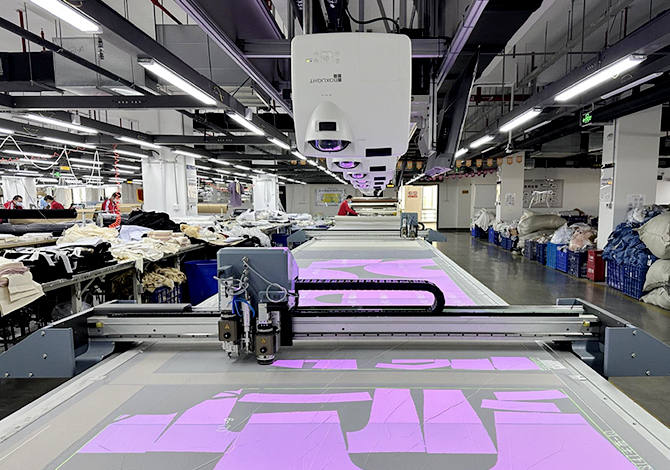
Core Capabilities:Groovecolor’s operational framework is built around a formidable technical moat designed to eliminate the risks associated with complex apparel production. Their process begins with an AI-powered automated fabric inspection system that detects microscopic flaws (such as broken yarns or oil stains) before cutting, ensuring a flawless foundation for subsequent treatments. Patternmaking is led by a team of master artisans, each with over 30 years of experience, who understand the precise drape required for oversized, boxy, or cropped fits. This expertise is paired with manual fabric spreading and advanced automated laser cutting, guaranteeing absolute precision across every batch.
Furthermore, Groovecolor possesses deep, in-house expertise in sustainable vintage treatments (acid wash, enzyme wash, ozone wash) and high-end embellishments (crackle prints, chenille embroidery, rhinestone applications). Their rigorous 8-step quality control system—spanning from raw material intake to pre-shipment AQL sampling—is fully integrated with an ERP data traceability system, ensuring that the final bulk production perfectly mirrors the approved sample.
Why They Stand Out:What truly separates Groovecolor from other streetwear manufacturers is their profound understanding of streetwear's visual language. They do not just apply a wash; they engineer the wash to evoke a specific cultural mood. They do not just print a graphic; they anticipate how the print will interact with the garment's drape and texture. For brands developing highly complex, multi-technique jerseys—such as an acid-washed, heavyweight mesh jersey with puff-printed graphics and distressed appliqué—Groovecolor provides the systematic management and SMETA 4P certified ethical standards required to scale production reliably without compromising the brand's creative vision. They are the ideal partner for brands that view their garments as cultural artifacts rather than just clothing.
What Clothing Brands Should Check Before Developing Jerseys
Entering the fashion jersey category requires meticulous planning and a clear understanding of material and construction variables. Brands must evaluate several critical components before initiating development with any supplier to ensure the final product aligns with their vision and quality standards.
Mesh or Smooth Knit Choice
The fabric is the foundation of the jersey. Brands must decide between the classic, breathable texture of mesh (which leans heavily into retro sports aesthetics) or the sleek, modern drape of a smooth knit. The choice will dictate how the garment takes to various printing techniques and washes. Heavyweight meshes are currently trending for their substantial feel and ability to hold structured, boxy shapes. The supplier must be able to source or mill these specific fabrics, rather than relying on standard lightweight polyester.
Fit Direction
As discussed, the fit is what separates a fashion piece from a sports uniform. Brands must clearly define their fit direction—whether it is a severely cropped silhouette for a womenswear capsule or an exaggerated, drop-shoulder oversized fit for a core menswear line. The manufacturer must demonstrate the ability to grade these non-standard patterns accurately across all sizes, ensuring that the intended drape is maintained from size small to extra-large.
Collar and Panel Construction
The collar is often the defining detail of a premium jersey. Whether opting for a thick ribbed V-neck, a classic polo collar, or a complex overlapping crewneck, the construction must be impeccable. Additionally, intricate paneling (such as contrasting side stripes or shoulder yokes) requires precise sewing to ensure the garment does not pucker or warp after washing. The supplier should be able to provide examples of their previous work demonstrating these complex construction techniques.
Graphic Hierarchy
Streetwear jerseys often feature multiple focal points: a central sponsor-style logo, a crest, sleeve patches, and large back numbers. Brands must establish a clear graphic hierarchy and ensure the manufacturer can execute different techniques (e.g., high-density print for the sponsor logo, woven patch for the crest, and tackle twill for the numbers) harmoniously on a single garment. The supplier must understand how these elements interact and ensure that the application methods do not compromise the fabric's integrity.
Whether the Supplier Understands Lifestyle Styling
Ultimately, the most crucial check is assessing the supplier's cultural competence. Do they understand how the end consumer will wear the product? A factory that grasps lifestyle styling will proactively suggest adjustments—such as modifying the hem split or adjusting the weight of the ribbing—to enhance the garment's streetwear appeal, rather than blindly following a tech pack designed for a soccer match. This level of partnership is invaluable for brands looking to create truly resonant products.
Final Thoughts
The integration of football and sports-inspired jerseys into streetwear is not a fleeting micro-trend; it represents a long-term evolution in category development. As consumers continue to demand apparel that blends athletic comfort with high-fashion execution, brands must elevate their sourcing strategies. The days of relying on standard sportswear factories to produce fashion-led collections are over.
Successfully navigating this space requires partnering with manufacturers who operate at the intersection of technical precision and cultural understanding. By prioritizing factories that offer robust quality management, advanced embellishment capabilities, and a genuine comprehension of modern silhouettes, brands can confidently develop jersey collections that resonate deeply with the contemporary streetwear market. The future of the fashion jersey lies in the details, and choosing the right production partner is the first, and most critical, step toward mastering them. As the market becomes increasingly competitive, the brands that succeed will be those that view their manufacturing partners not just as vendors, but as strategic collaborators in the creative process.
Where Regular Apparel Suppliers Fall Short in Streetwear Hoodie Development
A hoodie can look easy on a line sheet and still go wrong in six different ways once it becomes a real product. The body gets wider, but not sharper. The fleece gets heavier, but not better. The wash shows up, but the garment still feels flat. The graphic is there, but the whole piece reads more like merch filler than a serious streetwear item. That gap matters because hoodies are not just comfort basics anymore. For a lot of established streetwear brands, they are the piece that carries shape, mood, weight, graphic presence, and commercial identity all at once.
Many product teams only find that out after the first sample round, or worse, after the first bulk order. On paper, a regular apparel factory may look capable. It can source fleece, sew panels, attach rib, add a hood, and print a logo. But modern streetwear hoodie development is usually not lost at the sewing stage. It is lost in proportion judgment, fabric behavior, wash control, graphic balance, and the invisible decisions that keep a statement garment from collapsing into something ordinary. That is exactly why hoodies have become one of the clearest product categories for separating general garment capacity from real streetwear manufacturing judgment.
Quick answer: Regular apparel suppliers usually fall short in streetwear hoodie development because they treat hoodies like generic fleece products instead of brand-defining statement pieces. The gap shows up in silhouette control, fabric weight judgment, wash-and-print interaction, tech pack interpretation, and the factory systems needed to carry approved product direction into bulk without visible drift.
This article is for established streetwear brands, independent brands with real traction, fashion labels with proven demand, and the product, sourcing, and merchandising teams that have to decide whether a factory really understands the category. The goal is not to glorify “complexity” for its own sake. The goal is to show where regular apparel suppliers tend to flatten the product, and what brands should verify before they commit a hoodie program to any manufacturer. That framing also aligns with the audience and positioning guardrails across your uploaded files: this topic should speak to brands with real product intent, not beginners looking for blanks, wholesale stock, or low-friction trial runs.
Why do hoodies expose the difference between general garment production and real streetwear development?
Hoodies expose the gap because they look simple in construction but carry a high number of visual and technical decisions at once. Once silhouette, hood volume, rib behavior, fleece weight, graphic scale, wash depth, and finishing all have to work together, ordinary apparel production logic starts showing its limits.
A lot of categories allow a factory to hide behind basic competence. A plain woven shirt can survive with clean seams and acceptable measurements. A hoodie usually cannot. In streetwear, the hoodie is often the garment where the whole brand’s product logic becomes visible. It tells you whether the team understands drop, width, compression at the hem, how the hood frames the upper body, how weight changes stance, and how the garment should feel once a wash or print process is added.
That is why general apparel factories so often misread it. They see a familiar construction. Streetwear teams see a silhouette system. Those are not the same thing. The category gets even more demanding when the program moves beyond clean basics into acid wash, vintage fade, distressing, cracked graphics, appliqué, embroidery, rhinestones, or multi-layer surface work. At that point, the hoodie is no longer a fleece garment with decoration. It becomes a product built around proportion, surface, and attitude as one unified statement.
For brand teams reviewing factory options, this is also where it helps to look beyond general apparel directories and into a recent breakdown of specialized streetwear apparel manufacturers. Once a hoodie program depends on oversized blocks, heavyweight fleece, wash-intensive development, and graphic discipline, the conversation stops being about “who can sew hoodies” and starts becoming a question of which manufacturers are structurally built for this category. That distinction is exactly where many sourcing mistakes begin.
Where do regular apparel suppliers usually misread silhouette, fabric weight, and on-body balance?
The first failure is often not workmanship. It is proportion judgment. A hoodie can be technically correct and still feel commercially wrong if the shoulder drop, body width, hood volume, rib tension, sleeve shape, and fleece weight do not work together on the body.
This is the part many regular suppliers underestimate. They assume oversized means adding width. They assume heavyweight means using a thicker fabric. They assume a drop shoulder is just a measurement change. But anyone developing real streetwear hoodies knows that silhouette is not built by one number. It is built by relationships. How wide is the body relative to the length? How much does the sleeve stack before it starts looking sloppy? Does the hood sit with enough presence, or does it collapse backward and flatten the upper shape? Does the rib finish the garment with controlled tension, or does it sag and drain energy from the silhouette?
Your uploaded hoodie category notes are very sharp on this point. Common failures from ordinary factories include hoods that collapse, ribbing that loosens after washing, fleece that is too soft or too light to support the intended shape, zipper plackets that wave, pocket placement that feels off, and drop shoulders that look awkward instead of relaxed. Those are not tiny cosmetic misses. They are the difference between a hoodie that reads like a serious branded product and one that looks like a generic promotional garment in heavier fabric.
Fabric weight makes the problem even clearer. A streetwear hoodie program can span cotton-based 200–350gsm options for spring and transitional drops, but the real core positioning here still centers on heavyweight programs, especially 400–600gsm fleece for fall and winter. That matters because weight changes the entire physical language of the piece. It changes drape, shoulder behavior, body tension, print feel, and how the hoodie sits when zipped, layered, or washed. Factories that are more comfortable with standard fleece often struggle not because they have never touched heavier fabric, but because they do not understand what that weight is supposed to do on body.
What usually breaks first when wash, print, and surface effects have to work together?
What breaks first is usually the interaction layer. Many factories can execute a wash, or a print, or embroidery as separate tasks. Streetwear hoodies fail when those processes are not developed as one garment system, so the final piece feels stacked with effects rather than built with intention.
This is one of the most important distinctions in the whole category. A washed hoodie is not just a hoodie that went through finishing. A printed hoodie is not just a fleece body with artwork added after the fact. Once you start working with acid wash, enzyme wash, stone wash, faded treatments, cracked prints, puff print, embroidery, chenille, felt appliqué, or layered graphic builds, every process changes the garment’s balance. The wash affects the hand feel. The print affects panel stiffness. Embroidery changes drape and weight distribution. Distressing changes how seams, hems, and edges are read.
That is why so many ordinary apparel suppliers produce hoodies that feel disconnected. The wash may be aggressive, but the graphic still feels too new. The distressing may be visible, but it looks like dirt instead of age. The fabric may have been processed, but the piece still reads flat because the graphic scale, contrast, and silhouette were never developed together. Your uploaded notes describe exactly this failure mode: acid wash that damages the surface without creating a premium effect, distressing that produces superficial dirtiness instead of layered vintage depth, and printed hoodies that end up looking like promotional fleece rather than fashion product.
This is also the point where internal education matters for readers who want a deeper process reference. When a paragraph is dealing with fabric behavior after finishing, vintage depth, and surface risk, it makes sense to point them toward advanced streetwear washing workflows rather than trying to turn this article into a wash encyclopedia. The hoodie development question is bigger than one finish. What matters here is whether the factory understands how wash, graphic expression, and silhouette need to land as one product system.
The same thing applies to decoration. Heavy embroidery, chenille, felt appliqué, cracked screen print, DTG, rhinestones, and multi-layer graphic construction can all work on hoodies. But they do not work by default. They only work when the garment block, fabric selection, surface treatment, and placement logic were built to carry them. That is why complex streetwear techniques are not really “extra features.” They are tests of whether the factory can integrate multiple processes into one coherent garment expression instead of just offering a menu of add-ons.
Why is following the tech pack not the same as understanding the hoodie?
Following a tech pack is execution. Understanding a hoodie is interpretation. Streetwear hoodie development usually requires a factory to read visual intent, spot production risks early, and explain how fabric, fit, graphics, and finishing will behave before those choices become expensive mistakes.
This is where a lot of brand teams get trapped by surface professionalism. A factory can respond quickly, quote cleanly, and sample from the file you sent. None of that proves it actually understood the garment. Streetwear hoodies often contain decisions that are only half visible on paper. A hood proportion can be technically matched to the spec and still feel too small for the body. A back graphic can be measured correctly and still feel timid once it lands on a boxier block. A fabric can meet the GSM range but fail the silhouette once it goes through finishing. A rib can look fine before wash and fall apart in attitude afterward.
The best manufacturing teams treat the tech pack as a starting point, not a shield. They flag risk before the first sample, not after the second correction round. They ask whether the intended wash will flatten the print contrast. They tell you whether the selected fleece will hold the shoulder line you want. They warn you when the zipper construction is likely to wave. They read the difference between “oversized” as a measurement outcome and “oversized” as a visual language. That kind of interpretation is exactly what your uploaded materials position as a real premium capability: not just making what was written, but giving advice around tech pack feasibility, material suitability, production logic, and cost structure before avoidable problems reach bulk.
For readers who want a deeper support piece around sample review, production translation, and where early-stage garment decisions usually fail, this is one of the most natural places to reference cut-and-sew manufacturing for streetwear silhouettes and a bulk-focused tech pack review process. Both links work best here as deeper reading, not as replacement sections, because the real point is still this article’s main one: factories fall short when they treat hoodie development like order intake instead of product interpretation.
What factory systems start mattering once a hoodie program moves beyond one good sample?
Once a hoodie program leaves the sample room, factory systems matter as much as creative direction. The real test is whether the manufacturer can carry approved shape, finish, and graphic intent through sourcing, cutting, sewing, washing, decoration, inspection, and repeat orders without visible product drift.
This is the part many brand teams only learn through pain. A sample can be beautiful because it was built slowly, corrected by hand, or saved by extra attention. None of that guarantees bulk-ready control. The real question is what happens when the hoodie has to move through material planning, pattern grading, spreading and cutting, sewing, wash, print, embroidery, trim handling, inspection, and packing at production speed.
Your uploaded files describe that difference in very practical terms. The stronger model is not a single “secret technique.” It is a compound operating system: risk screening before finished goods, patternmaking led by experienced block specialists, manual spreading followed by automated cutting, process control across washing and decoration, multi-stage inspection, and data traceability strong enough to catch problems before they spread through volume. The point is not to celebrate machinery. The point is that hoodie programs built around heavier fleece, more aggressive finishing, and more demanding graphic expectations need structured controls long before the final inspection table.
This is also where China-based infrastructure matters for many US, UK, and EU streetwear teams. The issue is not geography by itself. It is whether the factory-side system can shorten the window between design approval and bulk readiness by pre-planning fabric bases, tightening process flow, and reducing the chaos that comes from over-fragmented finishing. Your internal knowledge base frames this well: many established brands are looking for a shorter factory-side time window, not because speed is a vanity metric, but because delays kill market timing and make seasonal planning harder to control.
How should sourcing teams read quotes, timelines, and development promises without getting fooled by surface capability?
The most dangerous quote is often the one that feels too easy. Fast sampling, casual pricing, and generic “we can do that” language may sound efficient, but complex streetwear hoodies usually reveal their real cost and risk in fit correction, finishing tests, material choice, and bulk execution discipline.
Streetwear teams should not read hoodie quotes like commodity fleece quotes. The garment may be priced as if it were standard because the factory has not really accounted for what the design asks it to do. That is where problems start. If the body depends on heavier fleece, if the shape needs a real drop-shoulder stance, if the finish involves acid wash or vintage fading, if the artwork includes layered decoration, or if the zipper and pocket details need sharper execution, the true development burden sits in the decisions between spec and production.
Timelines tell a similar story. Your uploaded production materials describe a typical non-optimized supply chain as a long journey that can stretch across sample development, pre-production, bulk production, and shipping, with many brand teams pushed into early design lock because they do not trust the factory-side window. In contrast, stronger streetwear-focused operations tend to tighten the stages they directly control. The files describe roughly 3–4 weeks for sampling and about 4–5 weeks for bulk on core streetwear categories when the internal process is engineered well and the product direction is clear. That should not be read as a promise every order will be “fast.” It should be read as evidence that an organized factory can compress the stages it owns because its fabric pools, process planning, and category experience are already aligned to heavyweight and wash-intensive development.
So when a regular supplier says yes too quickly, the right reaction is not relief. It is curiosity. What exactly has been considered? Has the wash been tested against the graphic method? Has the fleece choice been checked against the silhouette target? Has the zipper construction been stress-read for wave risk? Has the quote included the correction path if the first hood shape is off? Mature sourcing teams know that the easy answer can become the expensive answer later.
What should established streetwear brands verify before approving a hoodie factory?
The best verification questions are product-specific, not generic. Brands should ask how the factory reads silhouette, how it chooses fleece weight, how it tests wash and graphics together, how it protects approved sample direction in bulk, and how it handles the small technical controls that keep clean hoodies looking premium.
A good first question is whether the factory can explain why the hoodie should be built a certain way, not just how. If the answer is only about stitching, machinery, or “doing what the file says,” that is not enough. A stronger answer talks about hood structure, rib behavior, pocket balance, zipper stability, shoulder stance, and how different fleece weights change the way the silhouette lands.
The second check is whether the team understands that graphics are part of the garment system. Your files repeatedly stress that streetwear graphics are not something simply applied on top. They interact with wash depth, GSM, fit, and visual proportion. That is why a sourcing team should ask whether the same artwork has been tested across different fleece weights, whether the back graphic is scaled for the actual body width, and whether the intended finish will support or weaken the image.
The third check is bulk logic. Can the factory describe what usually changes between the approved sample and production, and how it reduces that risk? Can it talk through pattern discipline, fabric verification, finish testing, and inspection in concrete terms? This is exactly where one example of a structurally matched manufacturer can be introduced without turning the article into an ad. From a sourcing standpoint, factories built for this level of hoodie work are defined less by flashy decoration alone and more by whether they can run both ends of the category in volume: clean heavyweight essentials and process-heavy statement pieces. Groovecolor is one example of that type of streetwear manufacturer, because the uploaded materials position hoodies as one of its strongest categories, supported by heavyweight fleece programs, integrated multi-technique development, tech-pack feasibility review, and systems designed to protect product intent as orders scale.
What does a streetwear-ready hoodie manufacturer actually look like?
A streetwear-ready hoodie manufacturer is not defined by whether it can sew fleece. It is defined by whether it can translate visual direction into a bulk-ready product system. That means stronger judgment around silhouette, wash, graphics, trims, process interaction, and the controls that keep the garment from losing its identity at scale.
That final distinction is the real point of this whole article. This is not a debate about whether regular apparel factories are “bad.” Many of them are perfectly capable within the categories they were built around. The issue is structural fit. Streetwear hoodies ask for a different kind of factory brain. They ask for judgment around visual language, not just construction sequence. They ask for product development, not just order fulfillment. They ask for a system that can support oversized and boxy fits, heavyweight programs, acid wash and vintage fade, embroidery and appliqué, and the quiet controls that keep a clean fleece body from reading cheap once it hits volume.
For brands entering this stage, the real decision is less about finding the cheapest place to make a hoodie and more about choosing the manufacturing structure that matches the garment’s role in the collection. If the hoodie is just a filler basic, almost any factory can make something acceptable. If the hoodie is supposed to carry the collection’s fit language, graphic energy, and long-term sales weight, that is where regular apparel suppliers often fall short. And that distinction is usually visible much earlier than most brands expect.
Comments on “How do the best clothing manufacturers for streetwear ensure color consistency across batches?”